
Hearing protection at work is important to prevent noise-induced hearing loss and protect employees from the harmful effects of excessive noise exposure. Overall, hearing protection is important whenever employees are exposed to hazardous noise levels in the workplace to prevent hearing loss, preserve hearing health, enhance safety, and comply with regulatory requirements. It should be provided and worn consistently whenever and wherever needed to effectively mitigate the risks associated with excessive noise exposure. Depending on your job activities, hearing protection may be needed.
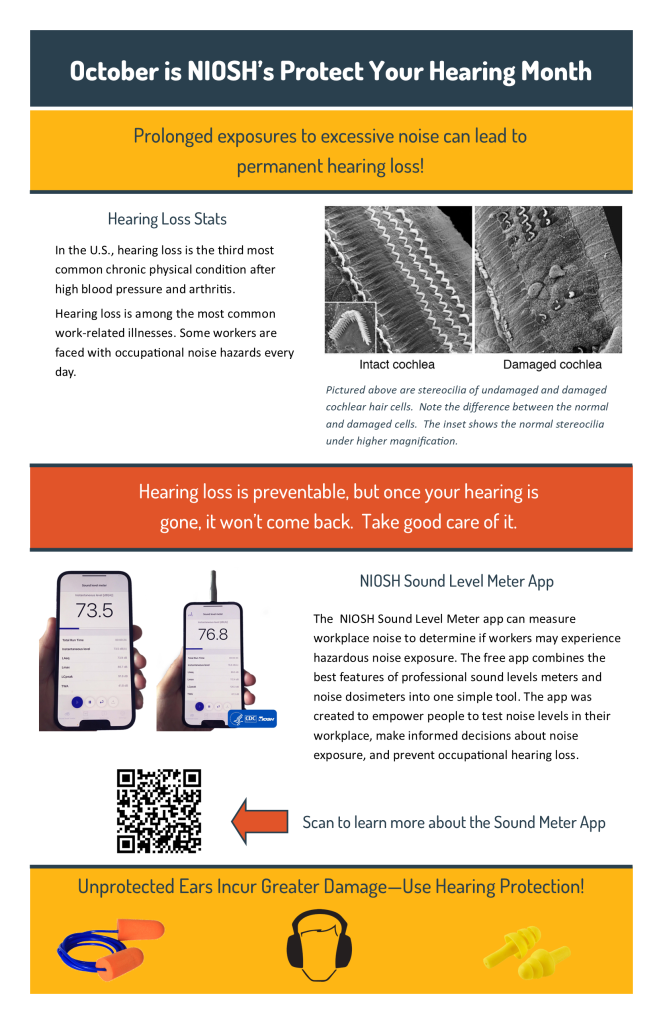
When choosing appropriate hearing protection for the workplace, consider the following tips:
- Assess Noise Levels: Determine the level of noise exposure in the workplace by conducting noise assessments or measurements. Identify areas or tasks where noise levels exceed recommended exposure limits.
- Understand Noise Reduction Ratings (NRR): Familiarize yourself with the Noise Reduction Rating (NRR) system, which indicates the level of noise reduction provided by hearing protection devices. Choose hearing protection with a suitable NRR based on the assessed noise levels and desired level of protection.
- Select the Right Type of Hearing Protection: There are various types of hearing protection available, including earmuffs, earplugs, and semi-insert earplugs. Choose the type that best suits the work environment, job tasks, and individual preferences.
- Consider Comfort and Fit: Select hearing protection that fits comfortably and securely without causing discomfort or interfering with work tasks. Look for adjustable features, cushioned ear cups or plugs, and lightweight designs for improved comfort during prolonged wear.
- Evaluate Communication Needs: Assess the need for communication while wearing hearing protection, especially in environments where verbal communication is essential for safety or productivity. Choose hearing protection with communication ports, electronic features, or attenuation options that allow for clear communication while still providing adequate noise reduction.
- Assess Compatibility with Other PPE: Consider how the chosen hearing protection will integrate with other personal protective equipment (PPE), such as safety glasses, respirators, or hard hats. Ensure compatibility and proper fit to maintain overall safety and comfort.
- Provide Training and Education: Train employees on the proper selection, use, and maintenance of hearing protection. Emphasize the importance of wearing hearing protection consistently and correctly to prevent hearing loss and ensure compliance with safety protocols.
- Encourage Consistent Use: Promote a culture of hearing protection by encouraging employees to wear hearing protection whenever exposed to hazardous noise levels. Provide reminders, incentives, and reinforcement to encourage consistent use of hearing protection in the workplace.
By following these tips and selecting appropriate hearing protection based on the workplace noise levels, job tasks, and individual needs, you can effectively protect employees from noise-induced hearing loss and ensure a safe and healthy work environment.