
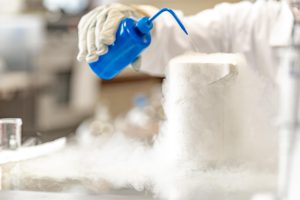
 A cryogen is a substance capable of producing extremely low temperatures when in a liquid or solid state. These substances are used in various applications, including scientific research, medical treatments, and industrial processes. Some common cryogens include liquid nitrogen, liquid helium, and liquid oxygen.
Cryogen hazards in the lab stem from the extreme cold temperatures and potential for oxygen displacement. Here’s a summary of these hazards and how to minimize risks:
Hazards:
- Extreme Cold Temperatures: Cryogens, such as liquid nitrogen and helium, can cause frostbite and severe tissue damage upon contact with skin or eyes due to their extremely low temperatures.
- Oxygen Displacement: Cryogens can displace oxygen in the air, leading to oxygen-deficient atmospheres in poorly ventilated areas, which poses risks of asphyxiation to personnel.
- Pressurization: Rapid vaporization of cryogens can cause pressure buildup in sealed containers or transfer lines, resulting in explosions or bursts if not properly vented or controlled.
Minimizing Risk:
- Personal Protective Equipment (PPE): Wear appropriate PPE, such as cryogenic gloves, face shields, and goggles, to protect against frostbite and eye injuries when handling cryogens. Insulated gloves and clothing are also recommended to minimize exposure to cold temperatures.
- Safe Handling Procedures: Follow established protocols for the safe handling, transfer, and storage of cryogenic materials. Use insulated containers, dewars, or cryogenic gloves when working with cryogens to prevent skin contact and reduce the risk of injury.
- Ventilation: Ensure adequate ventilation in areas where cryogens are used or stored to prevent the buildup of inert gases and minimize the risk of oxygen displacement. Use fume hoods or exhaust systems to vent vapors safely to the outdoors.
- Storage and Containment: Store cryogenic materials in well-ventilated, designated areas with proper labeling and signage. Use appropriate containers, such as vacuum-insulated dewars or cryogenic storage tanks, to prevent spills, leaks, or pressure buildup.
- Emergency Preparedness: Establish emergency response plans and procedures for handling cryogenic spills, leaks, or exposure incidents. Train personnel on emergency shutdown procedures, evacuation routes, and first aid measures for cryogenic-related injuries.
- Equipment Inspection and Maintenance: Regularly inspect and maintain cryogenic storage vessels, transfer lines, and equipment to ensure proper functioning and prevent leaks or pressure hazards. Follow manufacturer’s recommendations for servicing and maintenance to minimize the risk of equipment failures.
- Training and Education: Provide comprehensive training to laboratory personnel on the hazards of cryogenic materials, safe handling practices, and emergency response protocols. Ensure that personnel are familiar with the properties of cryogens and know how to respond effectively to potential hazards.
Remember to follow proper procedures, use appropriate equipment, and stay informed about emergency responses when working with cryogens.