
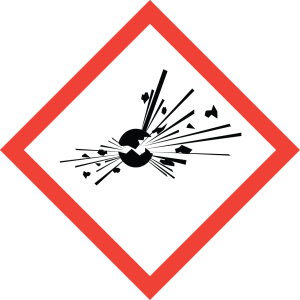
Reactive and explosive substances are materials that decompose under conditions of mechanical shock, elevated temperature, or chemical action, and release large volumes of gases and heat. The primary hazards associated with reactive chemicals or explosive include:
- Fire and Explosion: Reactive chemicals can react with air, water, or other substances to release heat, gases, or energy, potentially leading to fires, explosions, or runaway reactions. These reactions may occur spontaneously or be triggered by heat, friction, shock, or contamination.
- Toxic Gas Release: Some reactive chemicals can produce toxic gases or vapors as byproducts of their reactions, posing inhalation hazards to workers and nearby individuals. These gases may be corrosive, irritant, asphyxiating, or flammable, depending on the specific chemical involved.
- Corrosive Effects: Reactive chemicals may corrode and damage metals, plastics, rubber, and other materials upon contact, leading to equipment failure, structural damage, or environmental contamination.
- Projectile Hazards: Rapid reactions or gas evolution from reactive chemicals can generate pressure buildup inside containers, leading to rupture or explosion of the vessel and the ejection of fragments or projectiles, posing injury hazards to nearby individuals.
- Heat and Thermal Burns: Exothermic reactions of reactive chemicals can release heat, causing burns or thermal injuries upon contact with skin, eyes, or clothing. These burns may be severe and require immediate medical attention.
- Reactive Intermediates: Reactive chemicals may form unstable intermediates or byproducts during reactions, which can decompose, polymerize, or undergo further reactions, leading to uncontrolled releases of energy or hazardous substances.
- Toxicity and Health Effects: Some reactive chemicals may produce toxic or harmful substances as reaction products, posing risks of acute or chronic health effects upon exposure, such as respiratory irritation, systemic toxicity, or carcinogenicity.
Due to their potential for causing severe accidents, injuries, and environmental damage, reactive chemicals require careful handling, storage, and use, as well as the implementation of appropriate safety measures and controls. This includes conducting thorough risk assessments, following established standard operating procedures (SOPs), providing adequate training to personnel, using proper containment and ventilation systems, and having emergency response plans in place to address spills, leaks, or incidents involving reactive chemicals.
Storage and Use Recommendations for Reactive Chemicals
Appropriate use of reactive chemicals is crucial to ensure safe handling and minimize the risk of accidents, injuries, or environmental damage. Here’s a summary of key guidelines:
- Risk Assessment: Conduct a thorough risk assessment to identify potential hazards associated with the reactive chemical, including its reactivity, compatibility with other substances, and potential consequences of reactions. Development of a Standard Operating Procedure is required for the use of most reactive chemicals.
- Personal Protective Equipment (PPE): Wear appropriate PPE, including chemical-resistant gloves, safety goggles or face shield, lab coat or apron, and closed-toe shoes, to protect against chemical splashes, spills, or inhalation.
- Storage: Store reactive chemicals in designated areas away from incompatible substances, heat sources, or direct sunlight. Use secure cabinets, shelves, or containers to prevent spills, leaks, or accidental contact.
- Handling: Handle reactive chemicals with caution, avoiding unnecessary agitation, mixing, or exposure to incompatible materials. Use appropriate tools and equipment to minimize the risk of accidental spills, splashes, or releases.
- Mixing and Dilution: Follow established procedures and precautions when diluting or mixing reactive chemicals. Ensure compatibility of substances and use appropriate mixing vessels and techniques to prevent violent reactions.
- Ventilation: Work in a well-ventilated area to minimize exposure to chemical vapors, fumes, or gases. Use local exhaust ventilation or fume hoods when handling reactive chemicals indoors to control exposure levels.
- Labeling: Clearly label containers with the name of the chemical, hazard warnings (e.g., “Reactive”), and any relevant safety information. Ensure that labels are legible and remain intact throughout the chemical’s use.
- Emergency Procedures: Familiarize yourself with emergency procedures and equipment, including spill kits, eyewash stations, safety showers, and fire extinguishers. Know how to respond in the event of spills, leaks, or accidental exposures.
- Training: Provide comprehensive training and education to all personnel who handle reactive chemicals, including recognition of hazards, safe handling practices, emergency response procedures, and proper use of PPE.
- Documentation: Maintain accurate records of reactive chemical inventory, usage, and disposal. Document any incidents, spills, or near misses and conduct post-incident evaluations to identify areas for improvement.
Some materials, such as peroxide formers, may not be initially explosive, but may form explosive substances over time. These substances pose an immediate potential hazard and procedures that use or produce them must be carefully reviewed. These materials must also be stored in a separate flame-resistant cabinet or in a laboratory-grade refrigerator or freezer that is designed for flammable and reactive chemicals. Peroxide-formers can only be stored in refrigerators when unopened. Never store opened peroxide-formers (e.g., ether) in a refrigerator or freezer. Opened containers must be stored in a dry environment.
Pyrophoric chemicals are a special classification of reactive materials that spontaneously combust when in contact with air and require hazard-specific training. Flame-resistant lab coats must always be worn at all times when working with reactive chemicals. These reactive chemicals have the potential to cause highly energetic reactions that may result in a fire or explosion. Materials that pose a reactivity hazard should be purchased in the smallest practical size.
By following these usage guidelines and exercising caution when working with reactive chemicals, you can minimize the risk of accidents, injuries, and environmental damage in the laboratory or workplace.