
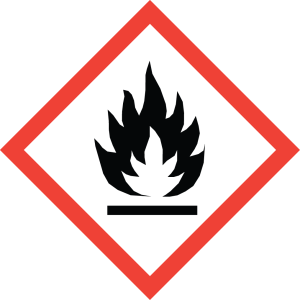
 A number of highly flammable substances are common in university laboratories. Flammable liquids include those chemicals that have a flashpoint of less than 200 degrees Fahrenheit. Flammable materials pose significant hazards in laboratory settings due to their potential to ignite and sustain fires or explosions. Here’s a summary of the hazards associated with flammables in the lab:
- Fire and Explosion Risk: Flammable materials, including liquids, gases, and solids, can ignite easily in the presence of ignition sources such as heat, sparks, open flames, or static electricity. Ignition of flammable substances can lead to fires or explosions, causing property damage, injuries, or fatalities.
- Flash Points: Flammable liquids have low flash points, meaning they can vaporize readily and form ignitable vapors at relatively low temperatures. This increases the risk of flash fires or explosions if flammable liquids are exposed to heat sources or open flames.
- Vapor Cloud Explosions: Vapor clouds formed by the release of flammable gases or vapors can ignite and explode if ignited by a spark, flame, or other ignition source. Vapor cloud explosions can generate significant blast pressures and thermal radiation, causing extensive damage and injuries.
- Storage and Handling Risks: Improper storage, handling, or transfer of flammable materials can increase the risk of spills, leaks, or releases, leading to the accumulation of flammable vapors or the spread of fires. Inadequate ventilation, poor housekeeping, or incompatible storage practices can exacerbate flammable hazards.
- Static Electricity: Static electricity buildup can ignite flammable vapors or dust clouds, particularly in environments where flammable liquids are transferred or dispensed. Static discharge from equipment, containers, or personnel can create ignition sources and increase the risk of fires or explosions.
- Exothermic Reactions: Some flammable materials may undergo exothermic reactions, releasing heat and generating flammable gases or vapors. Uncontrolled exothermic reactions can lead to thermal runaway, pressure buildup, or explosive decomposition, posing additional hazards.
- Chemical Incompatibility: Flammable materials may react violently with incompatible substances, catalysts, or oxidizing agents, leading to fires, explosions, or release of toxic gases. Proper segregation and storage of flammable materials are essential to prevent inadvertent reactions or chemical hazards.
- Electrical Equipment Hazards: Electrical equipment or appliances used in proximity to flammable materials can pose ignition sources if not properly designed, installed, or maintained. Sparks, arcs, or electrical faults can ignite flammable vapors or dusts, leading to fires or explosions.
Storage and Use Recommendations for Flammables
To mitigate the risks associated with flammables in the laboratory, it is essential to implement appropriate control measures, including:
- Store flammable materials in approved containers, cabinets, or storage areas designed to prevent ignition sources and control flammable hazards.
- Use explosion-proof equipment, intrinsically safe electrical devices, or spark-resistant tools in areas where flammable materials are present.
- Provide adequate ventilation, including local exhaust ventilation or fume hoods, to control the release of flammable vapors and maintain safe exposure levels.
- Follow proper handling procedures, transfer protocols, and use precautions when working with flammable materials to minimize spills, leaks, or releases.
- Conduct risk assessments, hazard evaluations, and safety training to raise awareness of flammable hazards and promote safe work practices among laboratory personnel.
Furthermore, flammables at AL must be stored in self-closing flammable storage cabinets in aggregate quantities of 10 gallons or more per room. If less than 10 gallons, flammables may be stored in regular cabinets. Flame-resistant lab coats must be worn when working with any amount of pyrophoric materials, when working with large quantities (1 Liter or more) of flammable materials, and/or with procedures where a significant fire risk is present (e.g., when working with open flame, etc.). Even though the use of these materials is fairly common in the lab setting, flammables can constitute a significant immediate threat and should be treated with particular care. Particular attention should be given to preventing static electricity and sparks when handling flammable liquids. For example, a metal dispensing container should always be bonded and grounded when pouring or dispensing liquid to prevent the buildup of static electricity and prevent the formation of sparks, which will cause a fire.
By implementing these control measures and fostering a culture of safety awareness, laboratories can effectively manage the risks associated with flammable materials and ensure a safe working environment for all personnel.