
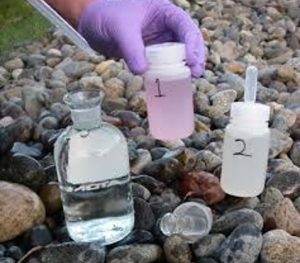
 Your field activities may require the use of chemicals in the field, whether it be using concentrated acid to preserve water samples to using lead acid batteries. These types of activities all carry additional risk and be prepared to mitigate and respond to these hazards much in the same way that you could in the laboratory. Common examples of hazardous materials use in the field include the following:
- Chemical use
- Transport and use of compressed gas cylinders
- Use of lead acid or rechargeable lithium ion batteries
Using Hazardous Chemicals in the Field
Sometimes your work may require you to use chemicals in the field. It is important to consider that the risk associated with chemical use in the field are similar to those associated with chemical use in the lab, but the field conditions are less controllable. Here are some considerations when planning for field chemical use:
- Reduce your usage as much as possible. Consider a less hazardous field procedure and save the hazardous work for back in the lab (e.g., preserving samples with concentrated acids).
- Obtain and keep a Safety Data Sheet for each chemical you will bring.
- When working in groups, ensure that all crew members understand the risks.
- Take appropriate safety precautions:
- Do you have the necessary PPE?
- Will you need an eye wash bottle or an emergency shower?
- Do the chemicals need to be stored outside the vehicle passenger compartment (e.g., emit toxic fumes, asphyxiation hazard)?
- Is this a chemical that should be used in a hood?
- How will you store chemicals that are incompatible?
- Have you provided secondary containment in case of spill or breakage?
- How will you handle any wastes generated?
Compressed Gas Cylinders in the Field
Keep in mind that transporting gas cylinders in vehicles that are unsuitable for such purposes can result in serious injury or death. The preferred method of transporting cylinders is in the supplier’s truck.
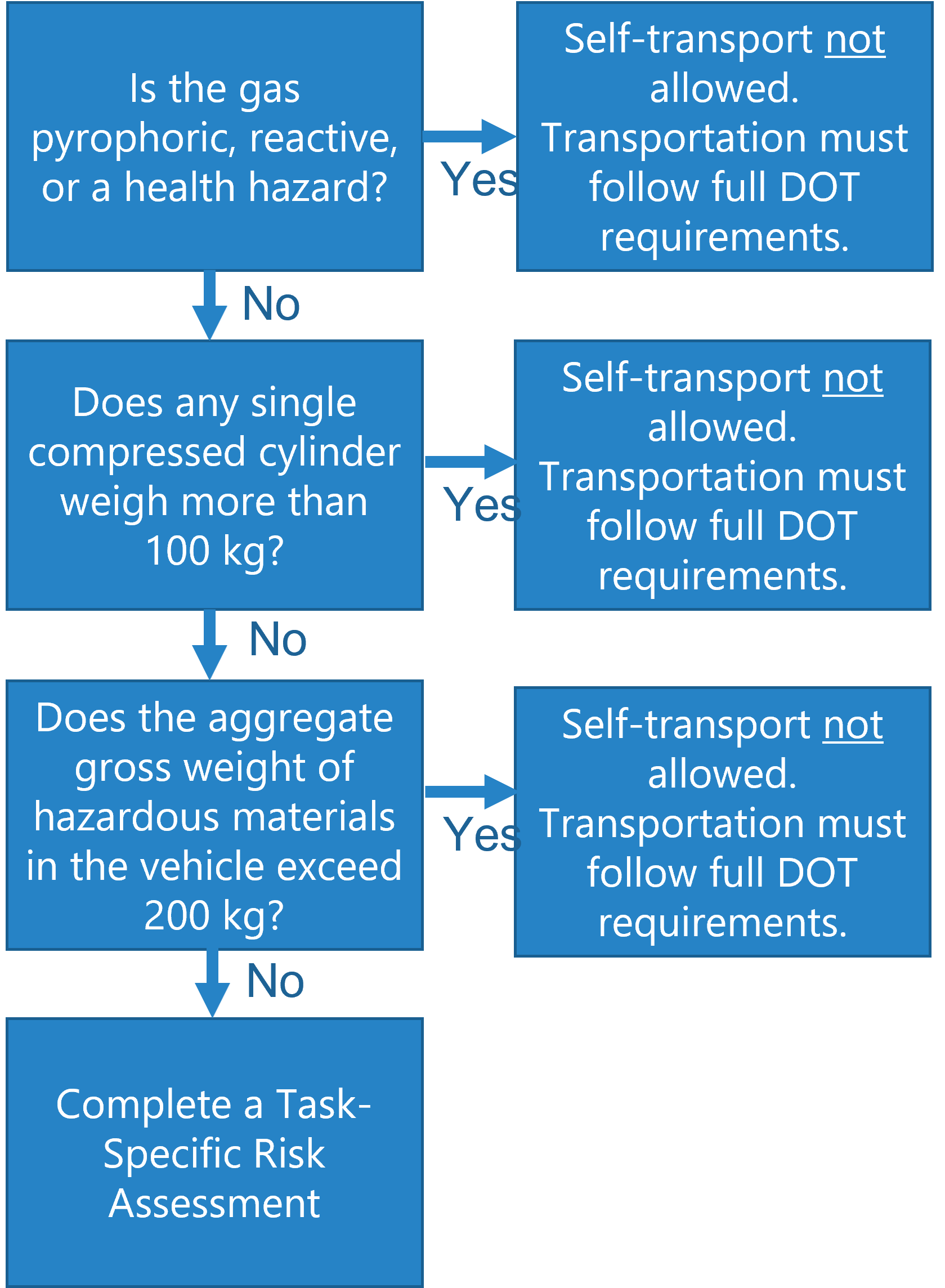
Staff are authorized to personally move (self-transport) small quantities of most, but not all, compressed gases by vehicle. Use this flowchart to help you decide and follow the applicable restrictions and guidance.
If a cylinder must be transported a short distance by an employee, the following requirements must be followed:
- A suitable vehicle, such as a truck must be used
- The valve cap must be on the cylinder to protect the valve stem.
- The cylinder should be secured in an upright position in the back of the truck to prevent cylinder damage. Inspect the cylinder for existing damage prior to attempting transport.
- The cylinder must be located in the back of the truck to provide adequate ventilation in event of a leak.
- Take a direct route to the new location and do not make any intermediate stops along the way. Avoid heavy traffic routes.
- Never move or transport a cylinder with the regulator attached.
Lead Acid Battery Hazards
Over two thousand people are injured every year using lead acid batteries. Half of those are the result of acid burns to the face and eyes. Most of the remaining injuries are from lifting or dropping the heavy batteries. Batteries can also become dangerous projectiles in motor vehicle accidents, not to mention that they are capable of delivering an electric charge at a very high rate.
Part of the hazard associated with lead acid batteries is the electrolyte solution, which is comprised of 35% sulfuric acid. If the battery is tipped, this acidic solution can spill out from the battery. Improper charging procedures can also add to the risk. During charging, lead acid batteries produce hydrogen and oxygen gases as electrolysis occurs. Hydrogen is very flammable and easily ignited. Oxygen supports combustion. If charged in a poorly ventilated area with an ignition source, it can result in an explosion.
Precautions for Safe Lead Acid Battery Use
Here are some precautions to minimize risk associated with lead acid battery usage:
- Always store or recharge in a well ventilated area away from sparks or open flames
- Use only chargers designated for the type of battery being charged
- Never overcharge
- Never store battery on its side
- Wear proper PPE
- If it spills on your skin or in your eyes, flush immediately with water for 15 minutes and then seek medical attention
- Load appropriately in vehicles to avoid dangerous battery projectiles in an accident
- Use secondary containment
Rechargeable Lithium Ion Batteries
Add SOP link.