
Since 1993, Maryland’s cases of Lyme disease reported to the Centers for Disease Control and Prevention (CDC) have increased by more than 650 percent!
Maryland has one of the highest rates of Lyme disease in the U.S. But many healthcare professionals believe that the actual number of cases far exceeds even these figures.
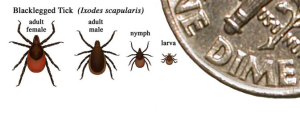
Lyme disease is caused by bacteria transmitted by the bite of an infected black-legged tick, often carried by white-tailed deer. The tick must be attached to the skin for at least 24 hours for transmission to occur, but not every tick bite causes Lyme disease. There is no vaccine currently available, so prevention along with early detection and treatment are important.
From three to 30 days following a tick bite, a gradually expanding rash occurs at the site of the tick bite in 70-80% of infected persons. The rash can expand over several days to up to 12 inches in diameter and may resemble a bull’s eye. But not everyone infected with Lyme will get this rash.
Other symptoms may include fever, headache, and fatigue. If untreated, the disease may spread and lead to loss of muscle tone on one or both sides of the face, severe headaches, neck stiffness, and joint pain and swelling.
Most cases of Lyme can be cured with antibiotics.
You can reduce your risk of a tick bite by following these tips:
- Wear light-colored long pants and long sleeves to help see ticks and keep them off your skin
- Tuck your pants into your socks, and tuck your shirt into your pants.
- Use insect repellent containing 20-50% DEET.
- Treat clothing with permethrin but never use permethrin directly on your skin.
- Check yourself daily after spending time in the field.
