
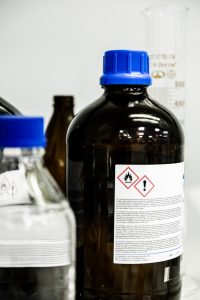
Ethan was a solid lab tech – quick, efficient, and usually by the book. But today, he was in a hurry. His shift was almost over, and his friend had texted about catching a movie. He had just one more task: dispose of the leftover solvent from his experiment. He glanced at the labeled waste container in the corner. It was almost full and probably couldn’t accommodate all the waste. Instead, he eyed the sink. One quick pour and he’d be out of here.
He hesitated because he knew the rule – solvent waste goes in the designated container. But he’d seen others do this before. Just a little bit. No big deal. He turned on the faucet, poured the liquid down the drain, and rinsed the sink. Done. Ethan left without a second through.
The next morning, the lab smelled… off. A sharp, acrid odor hung in the air. Maya, the first to arrive at the lab that day, wrinkled her nose. Something was wrong. Then she started coughing and her throat burned. Within minutes, people in other labs were noticing the smell and feeling sick. The safety officer arrived, frowning as they traced the smell. It led straight to the sink. A chemical reaction had started in the pipes overnight, releasing toxic fumes. Even worse, the solvent had corroded part of the plumbing. A hazmat team had to be called in. By lunchtime, the entire facility was shut down and everyone lost out on work that day. Some time-sensitive experiments even had to be scrapped.
Improper disposal of chemicals has a way of making its presence known, often in very unpleasant ways. Solvent odors can diffuse throughout buildings, sicken people, and, potentially ignite and cause fires and explosions. Chemicals can pollute the environment by persisting and accumulating in wastewater treatment sludges. Acids and bases can react violently in the drain. It would be very easy for local, state, or federal agencies to monitor the waste leaving our facility. They can very easily know what “goes with the flow”.
So, in the best interests of your safety and the health of your environment, always refrain from dumping hazardous chemicals down the drain. Besides doing the right thing, dumping any hazardous chemical waste or hazardous substance down the drain happens to be illegal.
The only waste that can be dumped down the drain here at AL is dilute or concentrated acid that has been neutralized in the laboratory first. Your acids must not be contaminated with other hazardous chemicals, like heavy metals. If you’re ever in doubt, please ask before dumping something down the drain.