Sam was a busy graduate student working in the lab one afternoon. He had to anesthetize rats for his research. For this, he used ether—a flammable chemical that causes central nervous system depression when inhaled. Mark set up his workspace inside the fume hood. He thought everything was fine, but there was one small mistake: the bottle of ether was sitting too close to the edge of the hood.
A few minutes later, strange things started happening.
Sarah, working at the next bench, felt dizzy. She thought it was just hunger. Then Jacob, across the room, started feeling sick too. Soon, everyone in the lab complained about headaches and nausea. But Sam, focused on his task, didn’t notice.
Someone finally realized what was going on. Ether fumes were escaping from the hood. The lab’s air was being filled with the chemical.
Sam hadn’t put the ether bottle far enough back inside the hood, so the hood couldn’t capture all the fumes. His small mistake put everyone at risk.
The lab had to be evacuated, and everyone went home feeling ill. The next day, Sam learned an important lesson: always double-check your setup. Even a small error, like placing a bottle too close to the edge, can have serious consequences.
The fume hood is there to protect you—and everyone else, but you need to use it properly for it to do its job.
Fume Hood Usage Tips
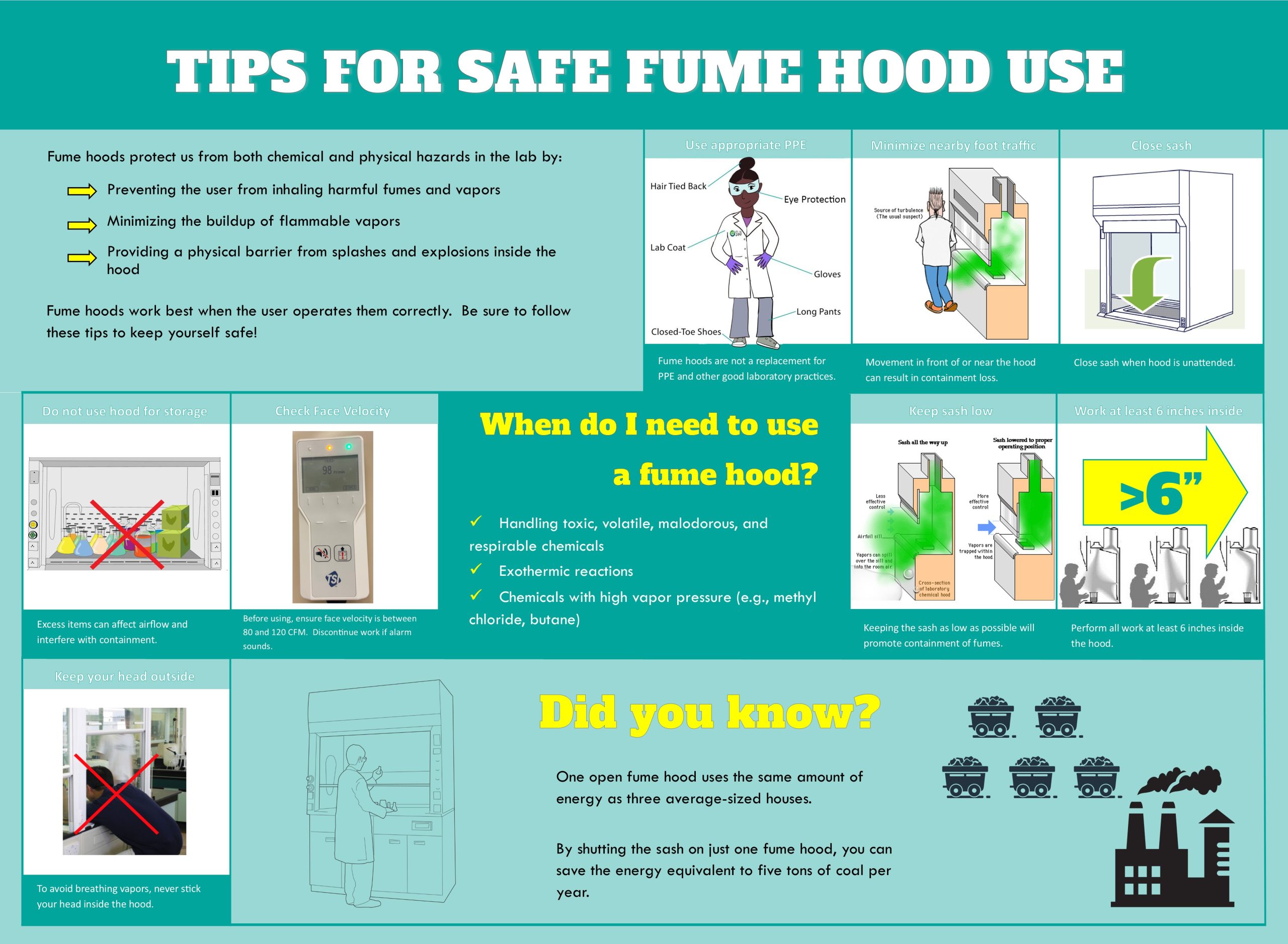
- Check the airflow: Before using the hood, ensure that it’s working properly. Check the airflow monitor or use a small piece of tissue paper or Kimwipe near the hood opening to verify that air is being drawn into the hood.
- Keep the sash at the correct height: The sash should be position as low as possible while also allowing you to work inside to ensure good airflow and to protect you from splashes or fumes. Never override the stops that are installed to prevent complete opening of the fume hood sash.
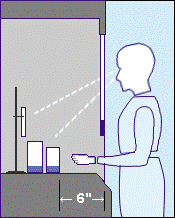
- Keep all sources of emissions at least 6 inches inside: Place your chemicals and equipment at least 6 inches inside the hood, away from the edge, to keep fumes from escaping.
- Avoid rapid movements: Don’t move your hands or arms quickly in and out of the hood, as it can cause airflow changes and allow fumes to escape. The same can happen when people walk in front of the hood or open/close doors to the lab.
- Close containers when not in use: Keep containers tightly closed when not actively using them. This also reduces the chance of fumes escaping. Furthermore, lids should never be left off volatile chemicals inside the hood as a means of evaporating waste. This practice is illegal.
- Keep the sash closed when not in use: If you’re not actively working, keep the sash as low as possible. This will keep fumes inside and also save energy.
- Never lean inside the hood: Keep your face and body outside the hood opening to avoid direct exposure to harmful chemicals.
- Minimize clutter: Don’t store chemicals or extra equipment inside the hood. Too much clutter blocks airflow and reduces the hood’s effectiveness.
By following these steps, you will help ensure that the fume hood works properly to protect you and everyone in the lab from harmful fumes and chemicals.
This poster summarizes tips for using a fume hood safely: