
Learning By Accident: Safe Use of Liquid Nitrogen
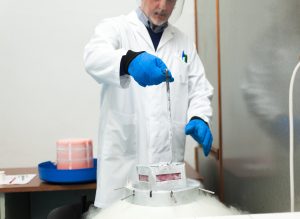
Two recent incidents at another university highlight the importance of handling liquid nitrogen dewars safely. In one incident, a researcher tried to use a wrench to open the liquid dispensing valve, which sheared off the liquid dispensing valve seat. The entire valve dislodged from the dewar causing a violent release of liquid nitrogen. The second incident also involved the inappropriate use of a wrench to open the liquid dispensing valve. In this case, the valve was completely unthreaded from the dewar, resulting in another uncontrolled release of liquid and gaseous nitrogen.
It is important to remember that nitrogen gas rapidly expands to 700 times its liquid volume, displacing oxygen and posing a significant asphyxiation hazard. Skin contact with the liquid can result in serious burns. In both of these incidents, the researchers immediately evacuated the area of the release and escaped unharmed. The primary contributing factor in both incidents was the deteriorated condition of the dewar. When the liquid dispensing valve becomes to difficult to open by hand, the dewar requires repair. Because we rent tanks at AL from our gas vendor, tanks and dewars are typically inspected more frequently than if we purchased our own.
Lessons Learned from These Incidents Include:
- Never use tools to force a valve open in a dewar or compressed gas tank.
- Consult AL’s Chemical Hygiene Officer if your liquid or compressed gas tanks appear to be damaged or do not work properly.
Signs of bad tanks can include: corrosion or damage to the cylinder body or valves, broken or inaccurate gauges, loss of product due to insufficient vacuum insulation, frequent venting of gas through the pressure release device, or unexpected frost formation on the valve handles or tank body.
Additional Tips for the Safe Use of Liquid Nitrogen:
- Always wear appropriate personal protective equipment.
- Always pour slowly to minimize thermal shock and splashing.
- Only use containers and equipment specifically designed for use with cryogens.
- Handle liquid nitrogen in well-ventilated areas.
- Never trap liquid nitrogen in a container, tubing, or piping