Appalachian Lab Monthly Newsletter
Strategic planning. Sounds boring, right? No! Strategic plans are an invaluable way for organizations to set goals, provide direction, guide decision making, and empower employees.
As you’ve hopefully heard, in 2025 UMCES will develop a new strategic plan, and shortly thereafter AL intends to develop its own strategic plan that is aligned with the new UMCES plan.
AL’s most recent strategic plan (from 2019) covered 7 key areas, including research, education, outreach/communication, development, IT, facilities, and sustainability, and it has served us well during the past ~5 years. Before we embark on developing a new plan, I invite you to reflect on, and contribute to documenting, what AL accomplished from its 2019 plan using this document.
Thanks in advance for your contributions!
Dave

New Faces
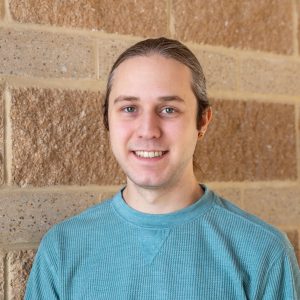
Gage Jacobs, Research Assistant
Gage joined the Water Chemistry Lab in January as a lab technician. He is also enrolled in the Environmental Management in Sustainability program through UMCES and FSU.
In his spare time he enjoys birding, foraging, microfishing, and being outdoors in general. He also likes to draw and do woodworking.
Recent Achievements/Activities/Successes
DEI Update
From: Brian Tsuru and Joely DeSimone
AL DEI working groups are working on a variety of exciting initiatives this semester related to diversity and inclusion at the lab. These groups are:
- planning ways to increase the diversity of seminar and Watershed Moments speakers
- developing “Mutual Expectations” agreements for graduate students, postdocs, FRAs, and new faculty. (The Mutual Expectations agreement AL DEI established last year for the summer internship program received lots of positive feedback from both mentors and interns!)
- coordinating Pride celebrations across UMCES for June, which will include a celebration at AL along with tabling at regional Pride festivals
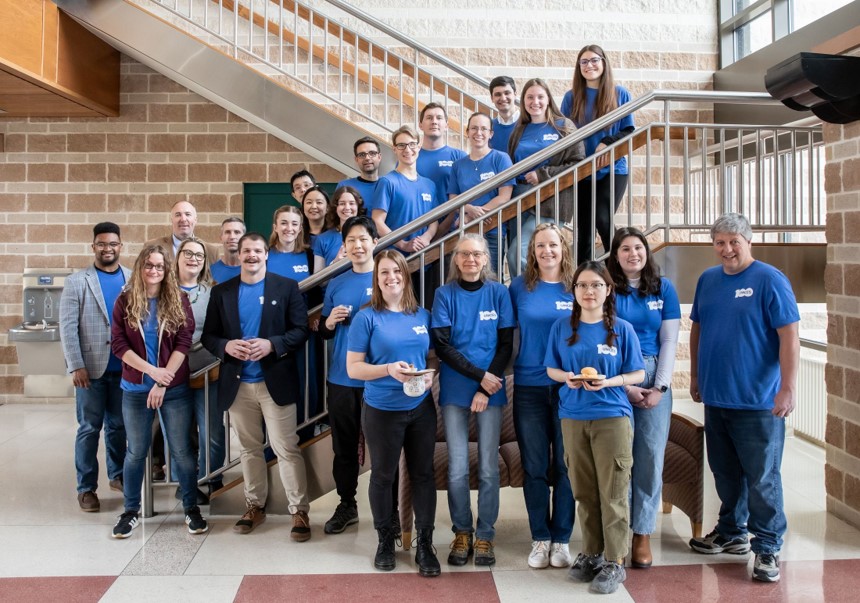
- hosting regular coffee and snack breaks (like the one before last week’s Town Hall) for community-building and cultural exchange
AL DEI meets the last Thursday of each month from 2-3pm in the admin conference room (Zoom option available). All are welcome to attend!
New Publications
Sarah M. Garvey, Eric A. Davidson, Claudia Wagner-Riddle, Adrian Collins, Matthew Houser, Tongzhe Li, Graham K. MacDonald, Mario Tenuta, David Kanter, Page Kyle, Nianqiang Wu, Kate A. Congreves, Yulei Wang, Laura Cardenas, and Xin Zhang. 2025. Emerging opportunities and research questions for green ammonia adoption in agriculture and beyond. Nat. Rev. Clean Technol.
G. Burch Fisher, Andrew J. Elmore, Matthew C. Fitzpatrick, Darin J. McNeild, Jef W. Atkinse and Jefery L. Larkin. 2024. Mapping recent timber harvest activity in a temperate forest using single date airborne LiDAR surveys and machine learning: lessons for conservation planning. GISCIENCE & REMOTE SENSING.
Duncanson, L., N. Hunka, T. Jucker, JJ. Armston, N. Harris, L. Fatoyinbo, C.A. Williams, J.W. Atkins, B. Raczka, S. Serbin, M. Keller, R. Dubayah, C. Babcock, M.A. Cochrane, A. Hudak, G. Hurtt et al. 2025. Spatial resolution for forest carbon maps. Science.
Naiqing Pan, Hanqin Tian, Hao Shi , ShufenPan, Josep G. Canadell, Jinfeng Chang, Philippe Ciais, Eric A. Davidson, Gustaf Hugelius, Akihiko Ito, Robert B. Jackson, Fortunat Joos, Sebastian Lienert. 2025. Soil nitrous oxide emissions across the northern high latitudes estimated by an ensemble of terrestrial biosphere models. Environment International.
Carson J. Neal, Zachery D. Zbinden, Michael E. Douglas and Marlis R. Douglas. 2024. Reducing DNA extraction costs through factorial design for the DNAdvance Kit. BMC Research Notes.
Benjamin A. Tonelli, Casey Youngflesh, Tyler Cox, Montague H. C. Neate-Clegg, Emily B. Cohen, Morgan W. Tingley. 2024. Spatial Nonstationarity in Phenological Responses of Nearctic Birds to Climate Variability. Ecology Letters.
Van Doren B, DeSimone J, Firth JA, Hillemann F, Gayk Z, Cohen E, Farnsworth A. 2025. Social associations across species during nocturnal bird migration. Current Biology.
Spotlight on Safety - Understanding Dosage
The famous Renaissance physician Paracelsus is often referred to as the ”Father of Toxicology.” He is credited with the idea that the “dose makes the poison”. This means that any substance, even water or oxygen, can be harmful if consumed in large enough quantities. The effects will depend on both the chemical along with how much of a substance enters the body.
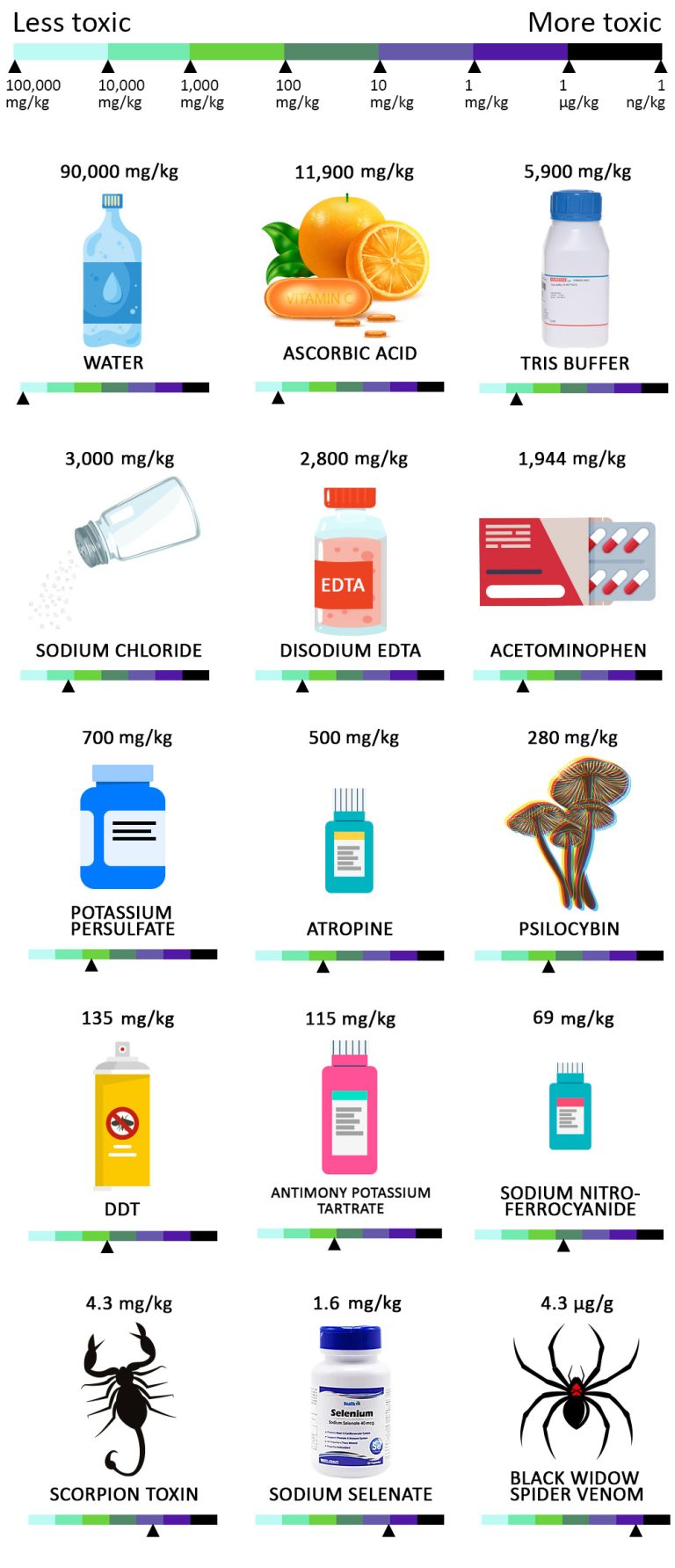
This is where LD50 comes in. Lethal Dose 50 (LD50) is a way to measure how toxic a substance is. It tells us the amount of a chemical that would kill 50% of a test group (usually animals like rats) in one dose. The lower the LD50, the more toxic the substance.
Think of it like this: Imagine a chili pepper contest. One person eats a jalapeño and feels fine. Another eats a ghost pepper and breaks into a sweat. Now, if someone eats a ridiculously high dose of pure capsaicin (the chemical that makes peppers hot), it could be dangerous.
LD50 values for various modes of exposure are provided in section 11 of Safety Data Sheets (Toxicological Information). These values can give you a good idea of the relative toxicity of the chemical(s) you are working with, especially if you compare those values to other substances with which you are more familiar.
For example, table salt has an LD50 of about 3,000 mg per kg of body weight in rats. That means an average adult would have to eat around half a pound of salt in one sitting for it to be deadly. Compare that to cyanide, a poison that most of us have heard of before. Cyanide has an LD50 of about 5 mg per kg, which is extremely toxic because it takes just a tiny amount to be lethal.
Check out the infographic below which summarizes the LD50’s for a variety of substances – some that you may have heard of before, along with some chemicals used and stored in our labs here at AL:
Admin Update - Spring Break
Keep in mind that the lab will be closed from March 17th through the 19th for Spring Break. If you expect to have to ship any packages or anticipate needing supplies, be sure to allow for that extra time in your planning.
Resource Review - Mental Health Resources
Mike Wilberg recently distributed an updated copy of the mental healthcare information sheet for UMCES. It is compiled annually by our wonderful team of volunteers: Juli Brush, Jeannette Connors, Kristen Harper, Alex Fries, and Sidney Anderson.
Mark Your Calendars
- February 21 at 11:00 AM – Visiting Scholar Seminar by Dr. Camille Thomas-Bulle
- March 7th at 11:00 AM – Town Hall Meeting
- March 7th at 3:30 PM- TGIF
- March 14th at 11:00 AM – Visiting Scholar Seminar by Dr. Bilgecan Sen
- March 17 – 19th – Spring Break – Lab Closed
- March 28th at 11:00 AM – Visiting Scholar Seminary by Dr. Joaquin Martinez
- April 11th at 11:00 AM – Visiting Scholar Seminar by Dr. Donald Boesch
- April 25th at 11:00 AM – Visiting Scholar Seminar by Dr. Yujing Gao
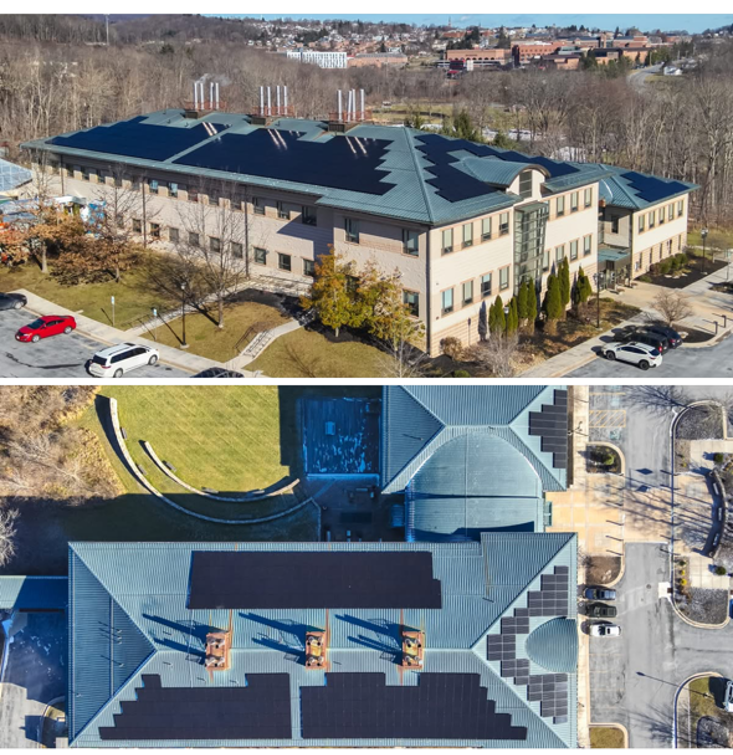
- April 23rd – AL Solar Ribbon Cutting
- August 28th – Richard Johnson Environmental Education Award Ceremony
- October 24-25th – MEES Colloquium
Quick Links
Do you have something you’d like to share with the AL community? Please submit any announcements and updates to Katie Kline or Heather Johnson.