Last October, the Appalachian Lab Investors Network (TALIN) generously provided funding to support several research projects at AL. One of the projects selected for funding was pitched by Matt Fitzpatrick’s Global Change & Biodiversity Lab. The project, titled “A near real-time biodiversity mapping, monitoring, and threat assessment system for the Central Appalachians”, aims to address the urgent need for effective biodiversity monitoring in the face of the increasing threats of climate change, habitat loss, and invasive species in the Central Appalachians, one of the most biodiverse temperate regions in the world and a critical climate refuge and migration corridor.
It is well known that biodiversity is declining worldwide at unprecedented rates, but conserving what remains requires information on how biodiversity is distributed, how it is threatened, and how it is changing. To date this need for information on biodiversity change largely had been filled using traditional, ground-based surveys that are expensive and limited in scope and frequency. However, advances in cloud computing, data collection technologies, and statistical algorithms – along with free access to remote sensing datasets – are for the first time making the promise of low-cost, near-real time monitoring of biodiversity across large regions feasible.
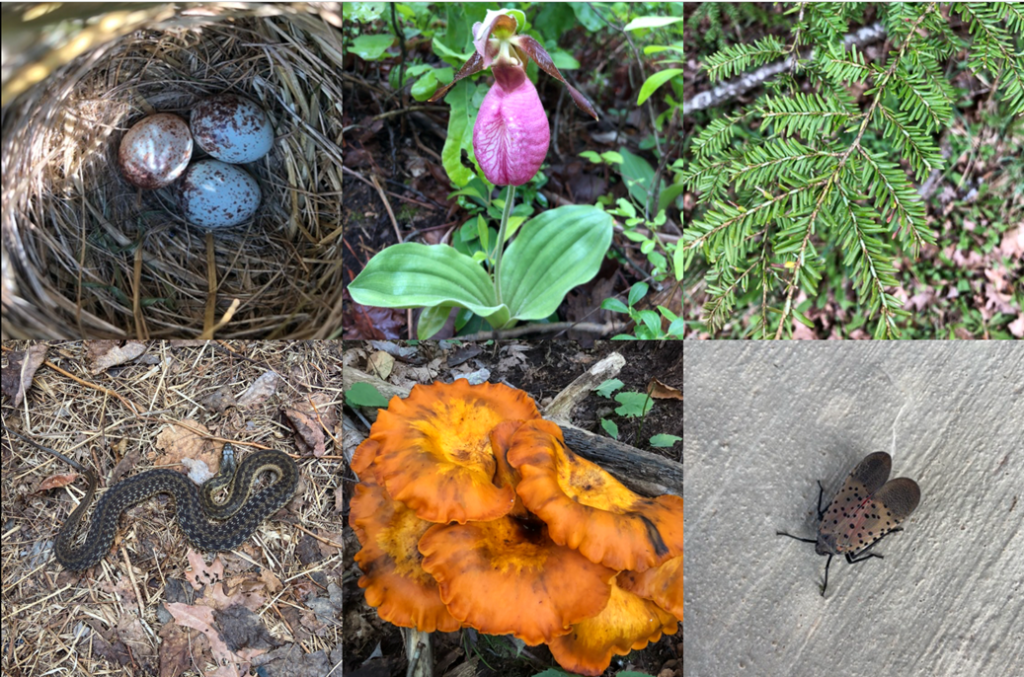
This new project will leverage advances in data science, cloud computing, and machine learning to periodically ingest and integrate millions of biodiversity observations from citizen science platforms like iNaturalist (check out AL’s iNaturalist project as part of UMCES’ 100th year celebration and join to participate!) with biophysical observations collected from multiple remote sensing platforms to identify sensitive areas where biodiversity change is ongoing or expected across the Central Appalachians. Machine learning algorithms will process these inputs to produce high-resolution biodiversity maps, assess changes over time, and identify emerging threats such as invasive species. The goal is to develop a functioning prototype capable of mapping and monitoring biodiversity change and anticipating potential future states, that, with additional funding and development, eventually could become embedded in regional conservation planning. The research team includes Matt Fitzpatrick, Xin Chen, and Burch Fisher.

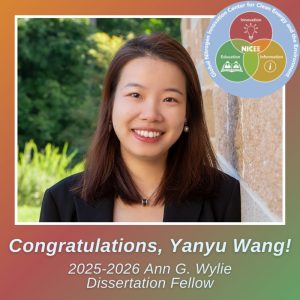 Fellowship Awarded
Yanyu Wang was recently awarded the 2025-26 Ann G. Wylie Dissertation Fellowship. This fellowship provides full-time support to University of Maryland doctoral candidates who are in the latter stages of writing their dissertations.
Yanyu’s dissertation focuses on advancing nitrogen management in agriculture and related systems by analyzing national nitrogen budgets, trade impacts, and nutrient recycling strategies in the U.S. and China. Her research aims to develop data-driven, policy-relevant, and internationally collaborative solutions that support sustainable nitrogen use.
Congratulations, Yanyu!
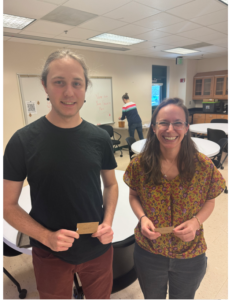 Pi Day
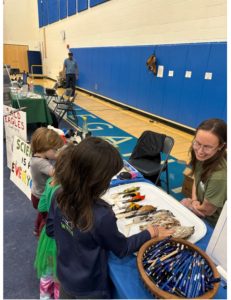 STEM Like a Girl Event
#100forUMCES
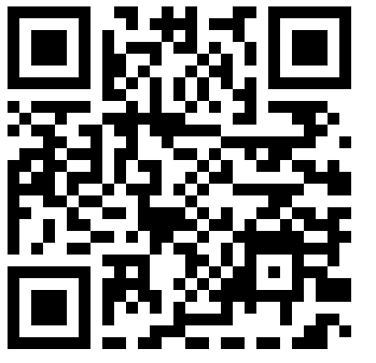 We want to contribute 100 volunteer hours to help with trash cleanup along the C&O canal and still need volunteers. The event has been scheduled for the morning of Saturday, May 31st. Scan the QR code at right to learn more.
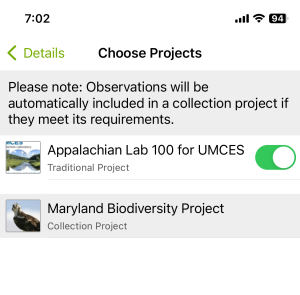
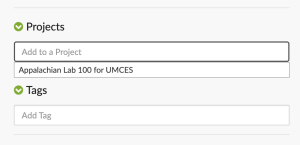
We’re also trying to document 100 different species on our AL campus through iNaturalist. Claire recently sent out an email about the project. Here’s the information in case you missed the email:
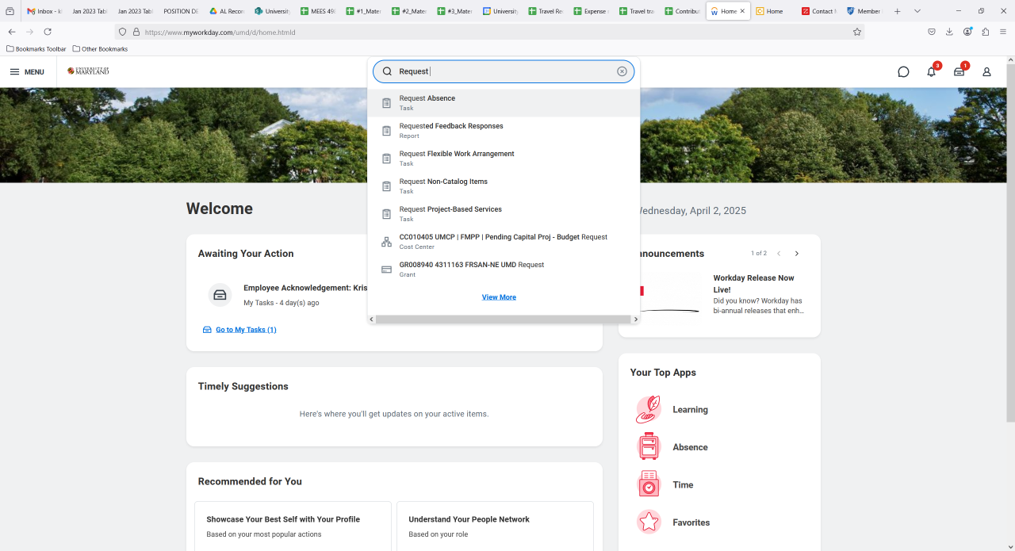
Submitting Leave Requests in Workday
Everyone should now be using Workday, and not Inside AL, to submit leave requests to their supervisor. To do so, first login to your Workday Account.
There are multiple locations to access absence requests within Workday:
- The “Your Top Apps” section in the right sidebar.
- The Menu option in the top left corner, by selecting “Absence”.
- The search bar by typing “Request Absence”.
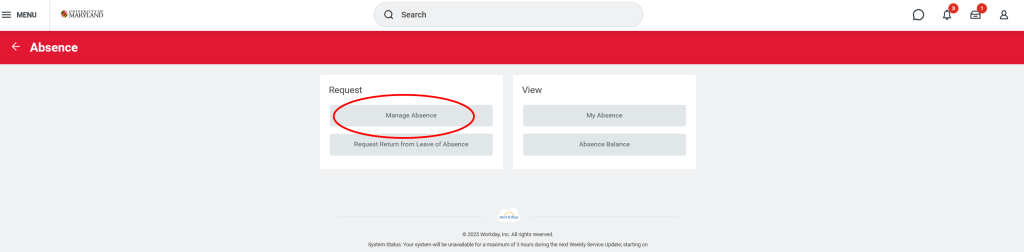
If using your top apps or the menu bar to make your request, select the “Manage Absence” button to create a new request:
If you use the search bar, you will be taken to a smaller version of the calendar.
Select the date(s) for which you’d like to request your absence, select the type of leave you are requesting and complete the additional fields and then submit your request.
After you submit your request, it will be forwarded to your supervisor for approval. You will receive an email and a Workday notification once a decision has been made about it.
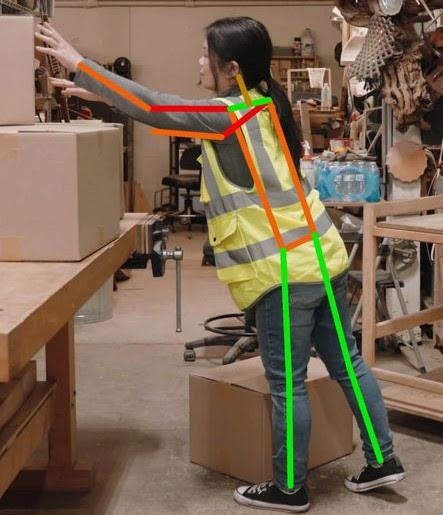 Do repetitive stress injuries at work have you feeling down? Musculoskeletal injury risks are often hard to see, but they are important to address to protect workers from performing tasks in ways that can cause injuries and reduce productivity over time.
Our workers compensation insurance company, Chesapeake Employers, has partnered with TuMeke Ergonomics to bring us computer vision ergonomic assessments, customized for the tasks you perform every day. Access to these ergonomic assessments is included at no extra cost. Here’s how it works:
- Using your phone camera, record a 30 second video of the task you wish to assess.
- Email the video to safetytech@ceiwc.com from your UMCES account. To send large video files, you may want to use a file sharing service such as WeTransfer. Include your agency number and company name in the email.
- Chesapeake Employers will upload the video to TuMeke Ergonomics and reply to your email with their ergonomic assessment of your video. The report will highlight risky postures and provide recommendations on how to change the job to reduce risk.